Lab-grown vs natural diamonds: the real differences, and which to choose for a gift
Both are real diamonds with the same crystal structure. What differs is where they formed, how they are graded, what they cost and what they are worth later. Here is how to choose for the person you are buying for.
By Shnoop Editors · Published 12 min read
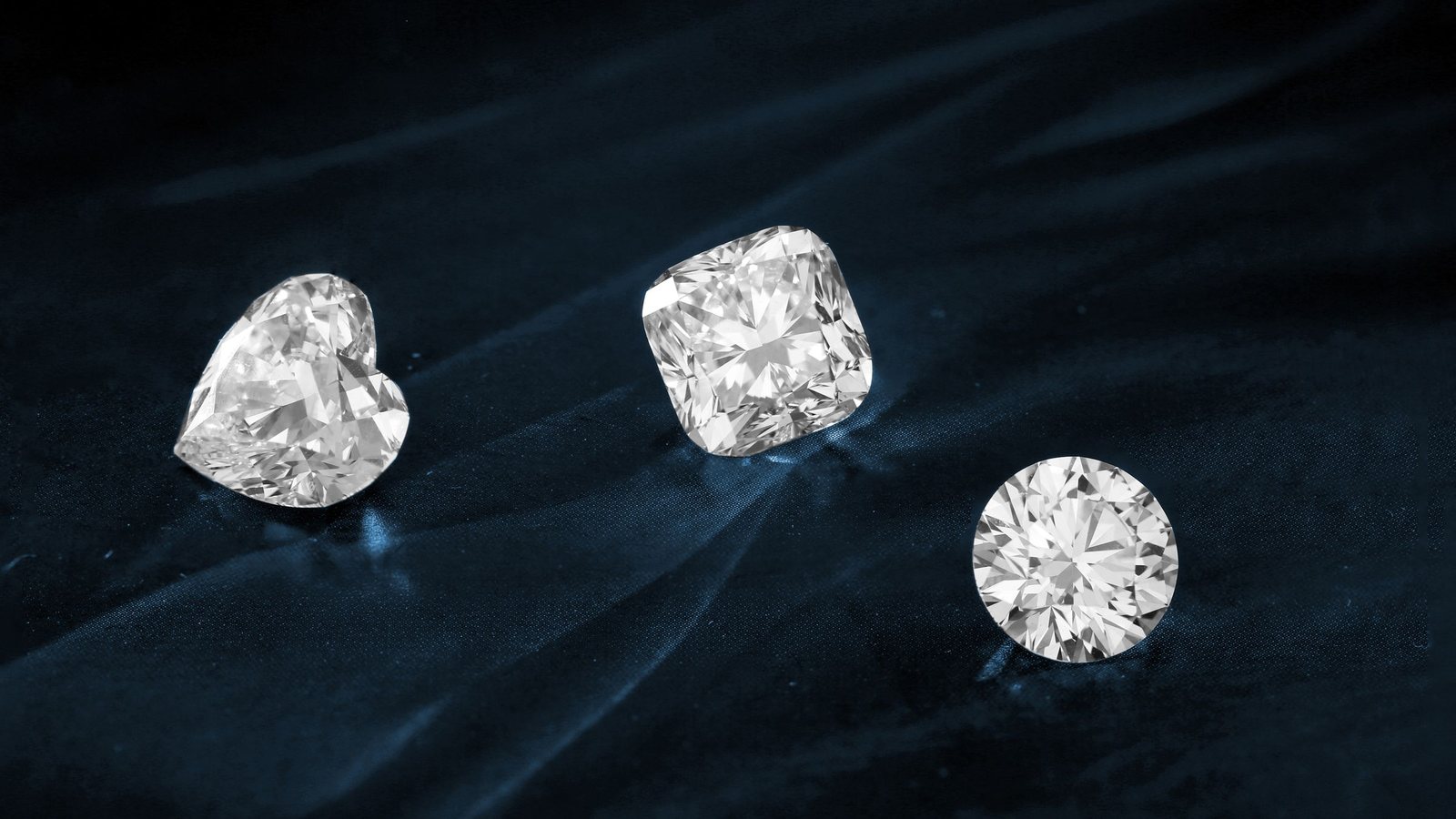
Save on PinterestLab grown and natural diamonds are both real diamonds: the same carbon crystal with nearly the same properties, and no difference you can see by eye. What differs is origin, grading, price and resale. For a gift, choose lab-grown for the most size and sparkle for your budget, and natural when rarity, heritage or a stone's story matters to them.
The lab grown vs natural diamond choice gets argued as if one side were fake. It isn't. The Federal Trade Commission rewrote its definition of a diamond in 2018 so that it no longer says "natural", because a diamond made in a lab has essentially the same properties as a mined diamond. The real differences are origin, how each is graded, price, resale value and the marketing claims made about ethics. This guide sets those out side by side, then turns them into a decision for the person you are buying diamond jewelry for.
Lab-grown diamonds vs natural diamonds, side by side
| Question | Natural diamond | Lab-grown diamond |
|---|---|---|
| How it formed | Deep in the earth, then mined | In a factory by HPHT or CVD, in weeks |
| What it is | Crystallized carbon | The same crystal structure and nearly the same properties |
| Can you see a difference? | No, not by eye | No, not by eye; a gem lab can tell |
| Grading report | Full color, clarity and cut grades from GIA, IGI and others | GIA: Premium or Standard since October 2025; IGI still gives full 4Cs grades |
| What it must be called | Diamond (unqualified "diamond" means mined) | Laboratory-grown, laboratory-created or [maker]-created diamond |
| Price | Far higher for the same size and grade | Far lower, and wholesale prices are still falling |
| Resale | Some secondary market, usually well below the retail price | Little resale market; buy it to wear, not to sell |
| Ethics claims | Kimberley Process covers rough stones only | "Eco-friendly" depends on the factory's energy source |
Differences between lab-grown and natural diamonds
Origin and age. Natural diamonds are formed deep in the earth's mantle, about 100 miles beneath the surface, under natural conditions of heat and pressure; most grew more than a billion years ago and were later carried to the surface and mined; each one is a one-off. Lab-grown stones are made in a factory in a matter of weeks. The Gemological Institute of America (GIA), the nonprofit lab that grades many of the world's diamonds, says lab-grown diamonds share the same crystal structure as natural diamonds, tightly bonded carbon atoms, and nearly the same chemical, optical and physical properties.
Diamond is 10 on the Mohs hardness scale and can only be scratched by another diamond, according to GIA. Because a lab stone has nearly the same physical properties, it offers the same durability as natural diamonds in everyday wear. Scientists have long called these stones synthetic diamonds; the jewelry trade now mostly says lab-grown or lab-created.
How lab diamonds are made
Scientists first grew diamonds in a laboratory in the mid-1950s, and jewelers have sold commercial quantities of colorless lab diamonds since the mid-2010s, according to GIA. Today lab diamonds are made using one of two methods, and both produce stones that end up in engagement ring settings, studs and tennis bracelets:
- HPHT (high pressure, high temperature): a carbon source and a metal mixture are heated in a capsule to about 1,300 to 1,600°C under very high pressure, imitating the conditions where natural diamonds form. The crystals grow over several days to weeks.
- CVD (chemical vapor deposition): a hydrogen and carbon-containing gas such as methane is broken down in a chamber at near-vacuum pressure, and the carbon settles onto a thin diamond seed, building the crystal layer by layer. A CVD run takes about three or four weeks.
Are lab-grown diamonds real diamonds?
Yes, lab grown diamonds are real diamonds. Under the FTC's Jewelry Guides, revised in July 2018, a lab-grown diamond is a diamond; what changes is the label. The FTC's recommended descriptors are "laboratory-grown", "laboratory-created" or "[manufacturer name]-created", so a laboratory-grown diamond and a lab-created diamond are the same thing. The word "cultured" may only be used when one of those terms sits right next to it with equal prominence. The Guides still hold that "real", "genuine", "natural" and "precious" cannot be used for lab stones, and a seller may not use "synthetic diamonds" as a phrase to suggest a competitor's lab diamond isn't a diamond.
In April 2019 the FTC sent warning letters to eight jewelry marketers, telling them not to use the name "diamond" for a lab-created or simulated stone unless it is immediately preceded by a clear disclosure that the stone is not mined. So an unqualified "diamond" on a receipt should mean a natural, mined diamond, and a lab diamond should always be named as one.
Real, but not the same as a simulant
Moissanite, cubic zirconia and white sapphire look similar but are different gemstones with different hardness and sparkle. They are diamond simulants, not lab diamonds. If a listing says "lab-created moissanite", it is not a lab diamond at all.
Can you tell the difference between lab-grown diamonds and natural diamonds?
Not by eye. GIA says lab and natural diamonds look indistinguishable by eye; it takes a gemology lab's advanced instruments, such as GIA's iD100 screening device, to detect it. Natural and lab-grown diamonds can have inclusions that affect diamond clarity, and both come in a range of colors, so a flaw doesn't prove a stone is natural. They are not identical to natural diamonds at the trace level: GIA notes the two have very different growth histories, and that is what a lab detects.
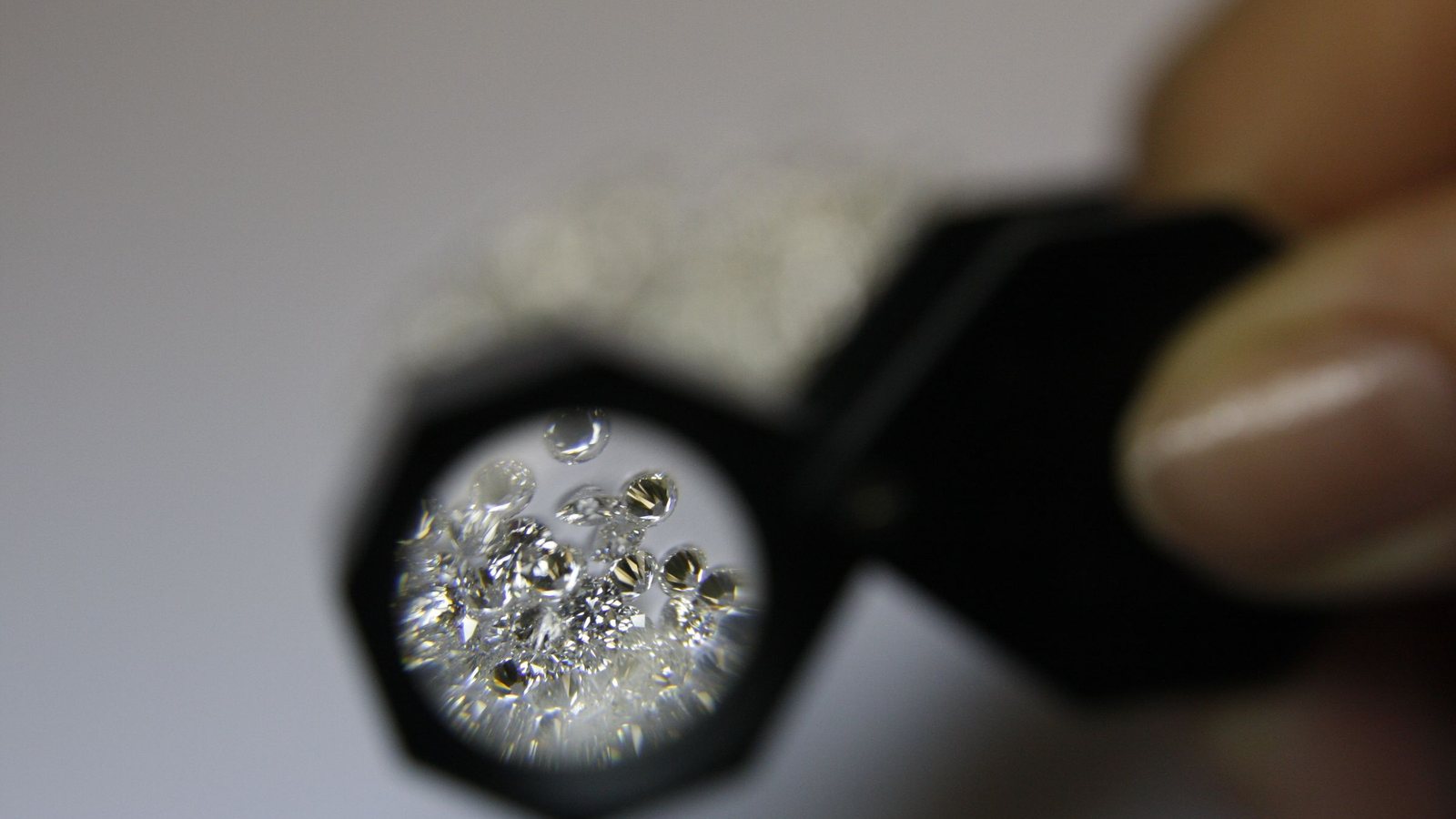
That is why the paperwork matters more than your eyes. GIA laser-inscribes every lab stone it reports on with the report number and a statement that it is laboratory-grown, written on the girdle, the thin outer edge. A jeweler can show you the inscription under magnification and match it to the report online. If a diamond is sold as natural, ask for a report from an independent lab that says so.
How lab and natural diamonds are graded
Natural diamonds are graded on the 4Cs: carat (weight), color, clarity and cut. GIA used to grade lab-grown diamonds the same way, but on June 2, 2025 it said it would stop using its natural-diamond color and clarity scales for them. Tom Moses, GIA's executive vice president and chief laboratory and research officer, said more than 95% of the lab-grown diamonds entering the market fall into a very narrow range of color and clarity. Since October 1, 2025, a GIA lab-grown report sorts a stone into Premium or Standard, and a stone below the minimum gets no GIA designation. Older GIA reports remain valid.
Other labs took a different path. The International Gemological Institute (IGI) still gives full 4Cs grades, and the Antwerp lab HRD stopped accepting lab-grown diamonds. So two lab stones of the same size can arrive with very different-looking paperwork. Neither format is a warning sign; just make sure the report names the origin clearly.
The paperwork matters more than your eyes.
How much cheaper are lab grown diamonds, and do they hold their value?
Lab-grown diamonds generally cost far less than natural ones of the same carat weight and grade, and the gap keeps widening. Industry analyst Edahn Golan's wholesale price index for lab stones is down 96% since he began tracking it in 2018, according to JCK. Mining Technology reported in May 2025, when De Beers said it would close Lightbox, its own lab-grown jewelry brand, that lab-grown wholesale prices had fallen 90% since Lightbox launched in 2018 at $800 per carat.
| Figure | What it shows |
|---|---|
| Lightbox launch price, 2018: $800 per carat | Where lab-grown jewelry pricing started for De Beers' own brand |
| Average 1-carat lab price: from $3,410 to $892 | Fortune, January 2025: how far average lab prices have fallen |
| Average 1-carat natural diamond price: down more than $1,800 since the 2022 peak | Fortune, citing the price tracker Tenoris: natural prices softened too |
| Golan wholesale index: −96% since 2018; −26% in 2025; −13% year over year in Q2 2026 | JCK, August 2026: the lab-grown slide has not stopped |
| Retail markup on lab-grown: more than 80% above wholesale | JCK, citing analyst Paul Zimnisky: why shelf prices fall more slowly |
Two practical results follow. Lab-grown diamonds offer a larger or better stone for the same money, which is why they are so common in studs and tennis bracelets. And a lab diamond is worth far less the day after you buy it: with prices still falling, the resale market is thin. Nothing in the latest JCK data shows the slide stopping, so in our reading lab diamonds could cost less again next year.
Budget rule of thumb
Set the budget first, then decide what matters most: carat size and sparkle (a lab stone stretches further) or a natural stone's rarity (a smaller one for the same money). Both can sit in the same 14-karat or 18-karat gold or platinum setting.
Do natural diamonds hold their value better?
Somewhat, but natural diamond prices have fallen too. Fortune reported in January 2025 that natural diamond prices had dropped 26% over the previous two years, citing the Guardian. In our reading, diamonds rarely work as an investment for ordinary buyers: retail prices include the jeweler's margin (for lab stones, JCK cites a markup of more than 80% above wholesale), and that margin doesn't come back when you sell. Natural diamonds are still the ones with an established secondary market, and the rarity that makes some people prefer them. Buy either one to be worn and loved, not to be sold.
Are lab grown or natural diamonds more ethical?
Neither side can claim a clean answer, and the FTC has been wary of the claims. Its 2019 letters warned jewelry marketers against unqualified words like "eco-friendly", "eco-conscious" and "sustainable", saying it was highly unlikely they could substantiate every reasonable reading of those claims. Mining and manufacturing each have costs, from environmental issues to human ones:
- Energy is the big variable for lab stones. Growing one takes a lot of electricity. The Natural Diamond Council, a mining-industry group, reported in 2023 that more than 60% of lab-grown diamonds are produced in China and India, where most grid electricity comes from coal.
- ABC News, reporting the view of Dr. Ulrika D'Haenens-Johansson, senior manager of diamond research at GIA, said many, if not most, lab-grown diamond producers use electricity from fossil fuels such as coal. So when a seller says lab-grown diamonds provide an eco-friendly alternative, ask what powers the factory.
- Some buyers choose lab diamonds because they avoid mining altogether. For natural stones, the worry is conflict diamonds, often called blood diamonds.
- The Kimberley Process certifies rough-diamond shipments to stop the flow of conflict diamonds: rough diamonds used by rebel movements to finance conflict against legitimate governments. It covers rough stones only, and only that kind of conflict, so ask the jeweler where a natural stone came from and whether the brand publishes its sourcing.
- Both kinds of diamond have trade-offs, and specific, checkable sourcing beats a general claim on either side.
Natural or lab-grown: which to choose for a gift or an engagement ring
Start from the person, not the lab vs natural debate. Some people prefer natural diamonds and care a great deal about where the stone came from; others want the biggest, brightest diamond the budget allows; many simply want something beautiful from you.
Pros and cons at a glance
- Lab-grown pros: lab diamonds are far more affordable than natural diamonds of the same size, so they offer more carat weight and a higher grade per dollar, and they look and wear the same.
- Lab-grown cons: a thin resale market, prices that are still falling, and questions about the energy used to grow them.
- Natural pros: rarity, an established secondary market and, for many people, the story of a stone formed in the earth.
- Natural cons: they cost far more for the same size; natural diamonds may still resell for well below retail; and the Kimberley Process covers rough stones only.
Choose a natural diamond if
- They have said a mined stone matters to them, or the piece is meant to be an heirloom passed down with its story.
- It is an engagement ring and you haven't discussed it. The Knot's 2026 Real Weddings Study found lab-grown center stones in 61% of engagement rings bought by U.S. couples married in 2025, so natural is now the less common choice; ask before you assume either way.
- You would rather have a smaller natural diamond than a larger lab diamond, and the rarity is part of the meaning.
Choose a lab-grown diamond if
- Size and sparkle matter more than origin: diamond studs, a tennis bracelet or a pendant meant to be worn every day.
- The budget is fixed and you want a noticeably larger or higher-grade diamond than a natural one at the same price.
- They have asked for lab-grown, or they choose newer and less traditional pieces in general.
How to find out what they'd prefer without spoiling the surprise
- Notice what they already wear and how they talk about it; a ring passed down from a grandmother says something different from a stack of fashion pieces.
- Ask a close friend or family member, who has often heard the opinion already.
- Raise it in general terms: a news story, a friend's engagement ring, a store window. "Would you care whether it was lab created?" rarely gives a specific gift away.
- If you still can't tell, buy where the return window is long enough to swap.
If you are choosing a piece now, our guides to luxury gifts for her under $500 and anniversary gifts for a wife who has everything include lab-grown diamond jewelry, and how much to spend on a gift helps set the number before you shop.
What to check before you buy diamond jewelry
- The words on the listing and receipt: "laboratory-grown", "laboratory-created" or "[maker]-created" next to the word diamond for a lab stone; a plain "diamond" should mean natural.
- An independent grading report for any center stone, lab or natural, and that its number matches the girdle inscription.
- The setting metal, shown as karat for gold (14K or 18K) or as platinum, and whether the setting is included in the price.
- If you buy lab-grown diamonds, the same carat weight and grade compared at a few retailers before you choose.
- The return window and the exchange or upgrade policy, in writing, before you pay.
- Any sourcing or energy claim backed by something specific: a named source, a certification or an audit, not just a word like "ethical".
Natural vs lab-grown is rarely a question of quality. Read the person you are buying for, then read the paperwork.
The Shnoop Letter
Want the next guide first?
New gift guides and seasonal picks, sent now and then — and our free Gift Planner (PDF) as a thank-you. Unsubscribe anytime.
We use your email only for this newsletter. See our privacy policy.
Questions readers ask
Do lab grown diamonds sparkle more than natural diamonds?
No. Sparkle comes from the cut and the stone's optical properties, and GIA says lab stones have nearly the same optical properties as natural ones. Two diamonds of the same cut quality look the same side by side. Because lab stones cost less, buyers often choose a larger or better-cut one, which can look brighter than a smaller natural diamond bought for the same money.
Which is better, lab grown or natural diamonds?
Neither is better as a diamond. Lab diamonds are real diamonds, and GIA describes the two as having the same crystal structure and nearly the same properties. Lab diamonds generally offer more carat weight and a higher grade for the money; natural diamonds offer rarity, an established secondary market (though resale is usually well below retail) and, for many people, meaning. For a gift, the better choice is the one the person receiving it would prefer.
Which lasts longer, natural or lab-grown diamonds?
Neither. Diamond is 10 on the Mohs scale and can only be scratched by another diamond, and GIA says lab stones have nearly the same physical properties, so, like natural diamonds, they last a lifetime with ordinary care. What wears out first is usually the setting, so have prongs checked by a jeweler from time to time, whichever stone you choose.
Are lab-grown diamonds worth anything after you buy them?
Very little on the resale market. Wholesale prices for lab stones have fallen year after year (Edahn Golan's index is down 96% since 2018, per JCK), so a used lab stone competes with cheaper new ones. Treat a lab stone as jewelry to wear, not something to sell later. Natural diamonds have a secondary market, but diamonds typically resell for well below their retail price.
Are lab-grown or natural diamonds more popular?
For engagement rings in the United States, lab-grown now leads: The Knot's 2026 Real Weddings Study, reported by JCK, found lab-grown center stones in 61% of engagement rings bought by couples married in 2025. That counts purchases, not preferences, so it can't tell you what one person would like. Ask, or ask someone who knows them.
Should an engagement ring be lab-grown or natural?
It depends on the couple, and it is worth asking rather than guessing. A lab-grown center stone allows a larger or higher-grade diamond for the budget; a natural stone offers rarity and a secondary market, though resale is usually well below retail. Many couples decide together, or the buyer asks a close friend. Either way, insist on an independent grading report that names the origin.
Keep reading
- Luxury gifts for her under $500: 6 picks she'll notice, and what the money buysA tight edit of six gifts between $200 and $500 for a wife, partner, mother or sister: who each one suits, which are romantic, and why the price buys something she will notice.
- Anniversary gifts for a wife who has everything: 11 picks, most matched to the traditional anniversary yearWhen she already owns the obvious things, let the year choose the gift. Eleven anniversary gift ideas for your wife, from a paper photo album to a gold and diamond pendant, each with an honest reason to skip.
More from the Journal
Sources
- National Jeweler: 8 key changes the FTC made to the Jewelry Guides (2018; diamond definition, lab-grown descriptors)
- FTC: FTC sends warning letters to companies regarding diamond ad disclosures (April 2, 2019)
- GIA 4Cs: Laboratory-grown diamonds (properties, HPHT and CVD, reports and inscriptions)
- GIA press release: new descriptive terminology for laboratory-grown diamonds (June 2, 2025)
- Whiteflash: GIA redefines laboratory-grown diamond grading (October 2025; IGI, HRD)
- JCK: Lab-grown diamond wholesale prices are in freefall; retail margins may be next (August 10, 2026)
- Mining Technology: De Beers to discontinue Lightbox lab-grown brand (May 9, 2025)
- ABC News via ABC7: Are lab-grown diamonds as sustainable as advertised? (April 23, 2024)
- European Commission: The Kimberley Process, the fight against conflict diamonds
- Fortune: Diamond prices fall for natural and lab-grown stones (January 27, 2025; Tenoris, Guardian figures)
- GIA: Diamond (formation more than a billion years ago, about 100 miles deep; Mohs hardness 10)
- GIA: HPHT and CVD diamond growth processes (growth times, methane, first lab diamonds in the 1950s)
- JCK: Lab diamonds and the engagement market (February 25, 2026; The Knot 2026 Real Weddings Study, 61%)
Written by Shnoop Editors; product facts are checked against the maker’s or retailer’s own pages. Read how we pick, or tell us about a mistake.